Services provided
Deliverables
Stack
Client
Padma Sri Travels
Hyderabad fleet operator · B2B corporate contracts & B2C rentals
01 — The problem
A 500-vehicle fleet managed entirely on phone calls
When I sat down with Padma Sri Travels, I saw a serious fleet business — corporate contracts with companies like GMR Hyderabad Airport and BHEL, 500+ chauffeurs, and an expanding EV fleet. But beneath the surface, everything was held together by phone calls, messy spreadsheets, and WhatsApp groups that couldn't communicate with their static website.
Dispatchers were assigning rides from memory. Drivers had no digital schedule. Customers had to call in just to find out where their car was. There was no single source of truth connecting what a customer booked, what dispatch sent out, and what a driver actually drove that day.
Stat — to confirm
[ ]
Manual phone bookings coordinated every week
Stat — to confirm
[ ]
Disconnected spreadsheets used before this rebuild
02 — The approach
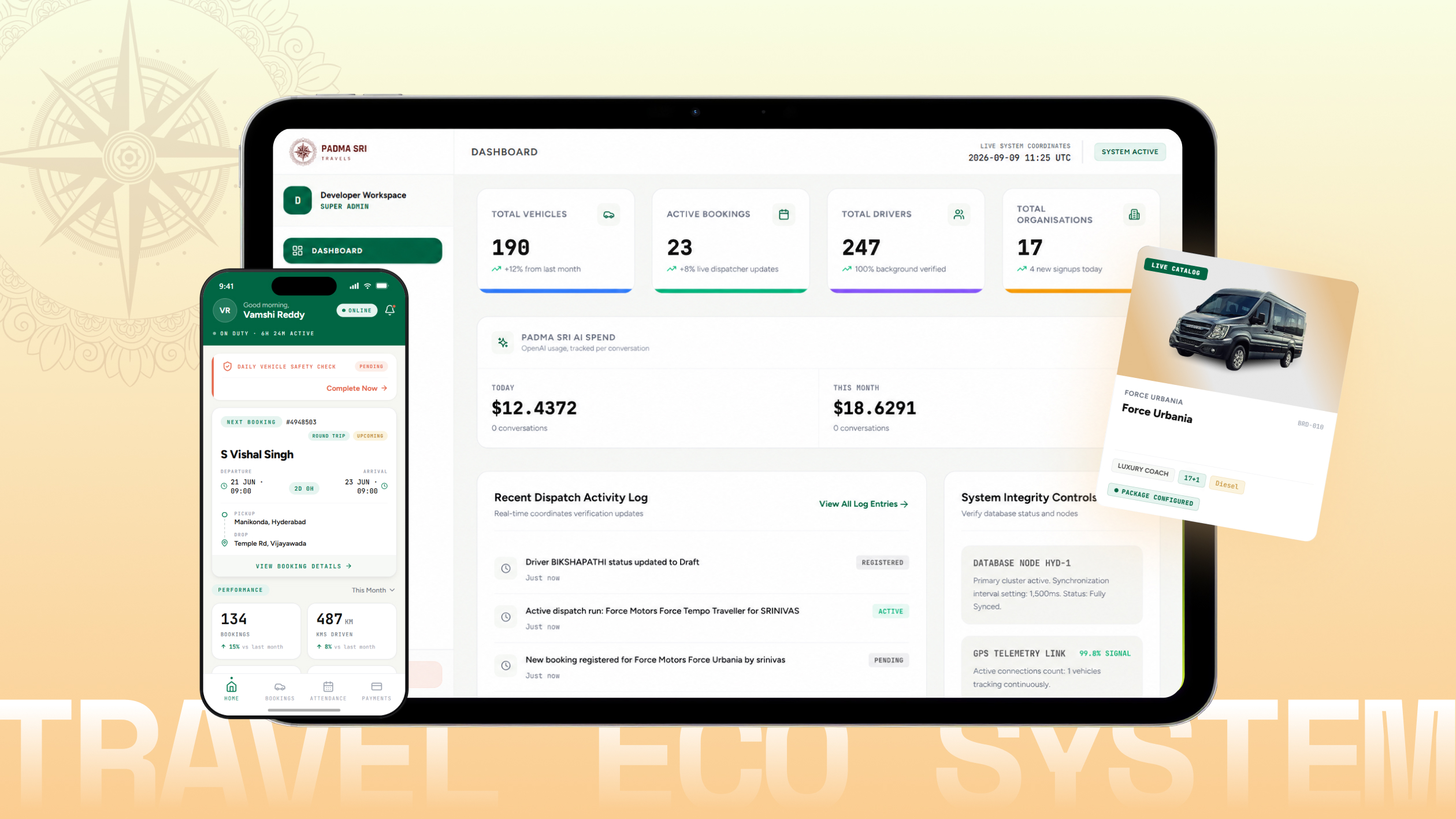
Four surfaces, one single database
Instead of building four separate apps with conflicting opinions, I connected everything to one single Supabase database. I unified the shared business logic — our pricing engine and booking policies — across codebases so a fare quoted on the website is the exact same number the operator dispatches and the driver sees on the road.
Surface 01
Booking Website
The public storefront — turns visitors into confirmed bookings with instant pricing.
Surface 02
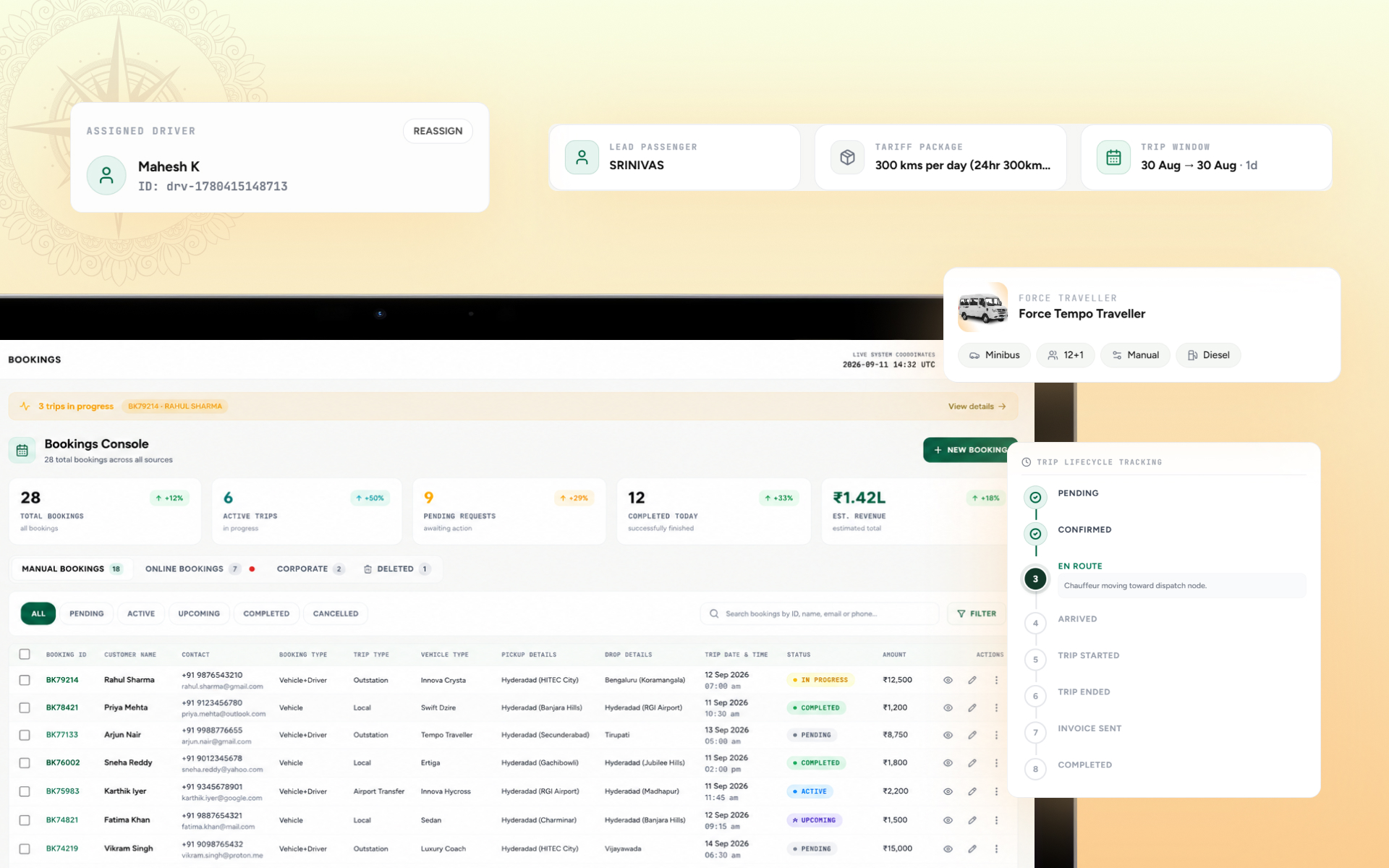
Admin Panel
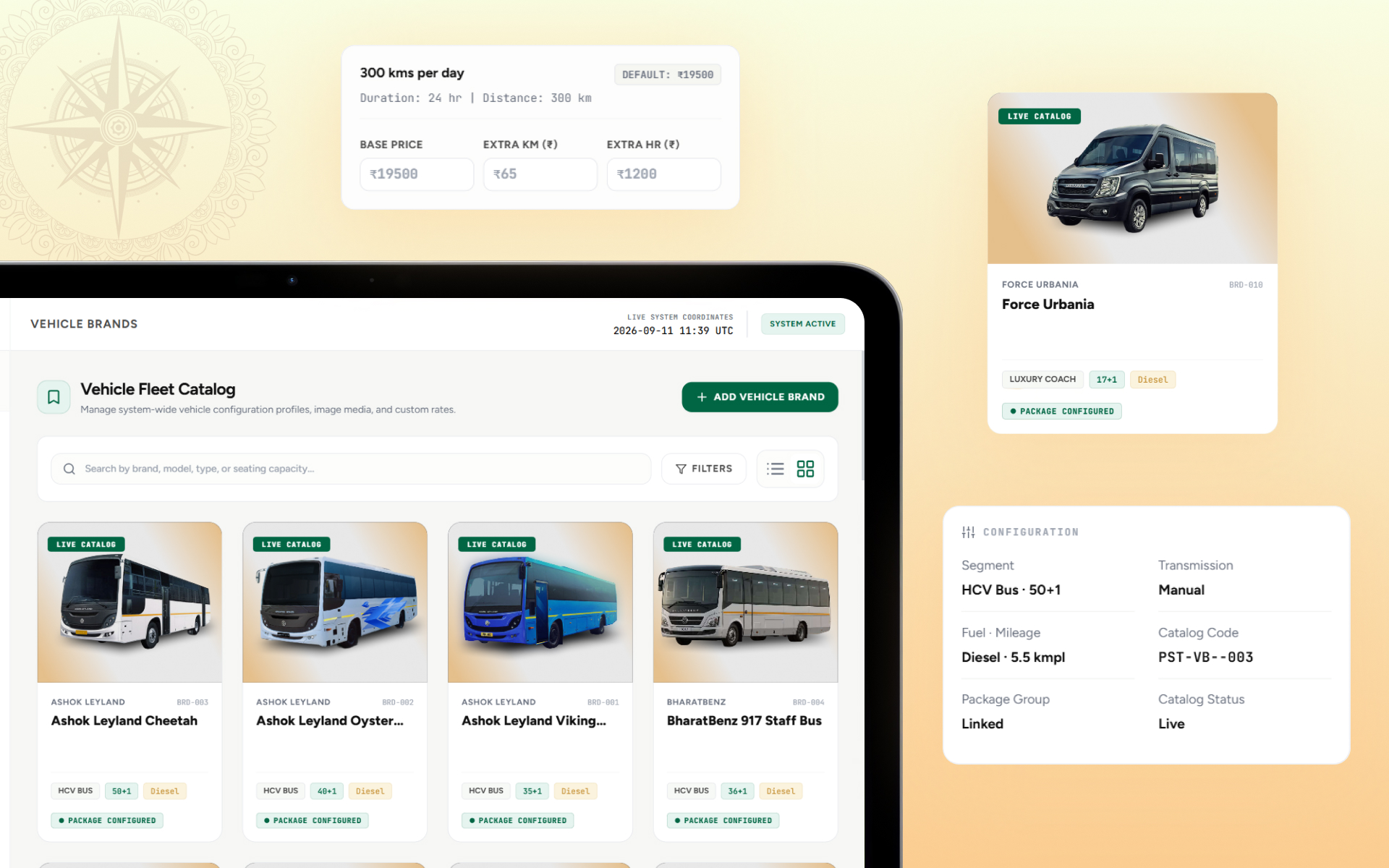
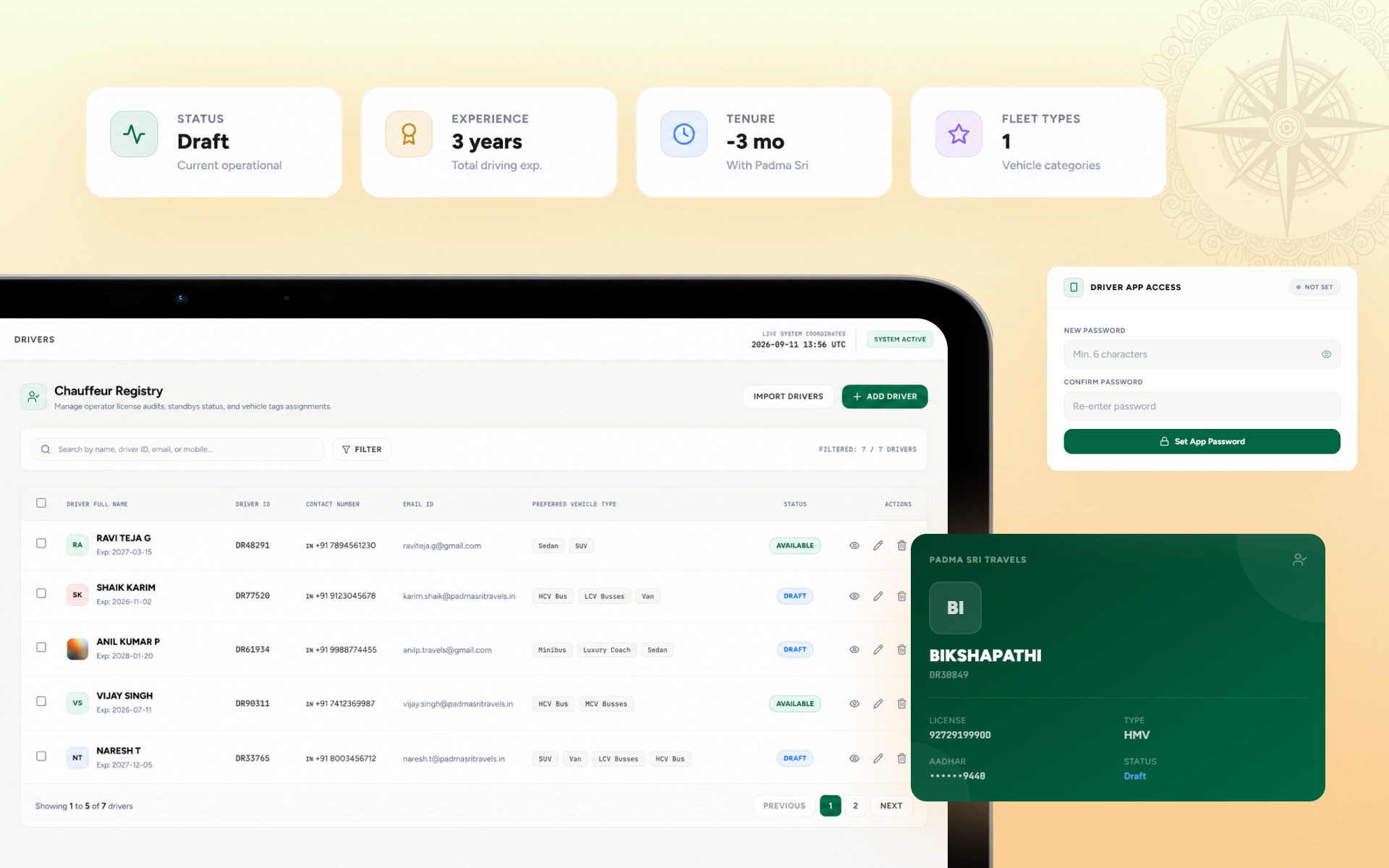
The dispatch hub — fleet availability, driver allocation, and B2B accounts in real time.
Surface 03
Driver App
The roadside tool — simple trip manifests, navigation, and one-tap status updates.
Surface 04
Customer App
The passenger app — fast on-the-go bookings, saved corporate profiles, and live trip tracking.

03 — Module deep-dives
Four products, four problems to solve
Module A
Booking Website
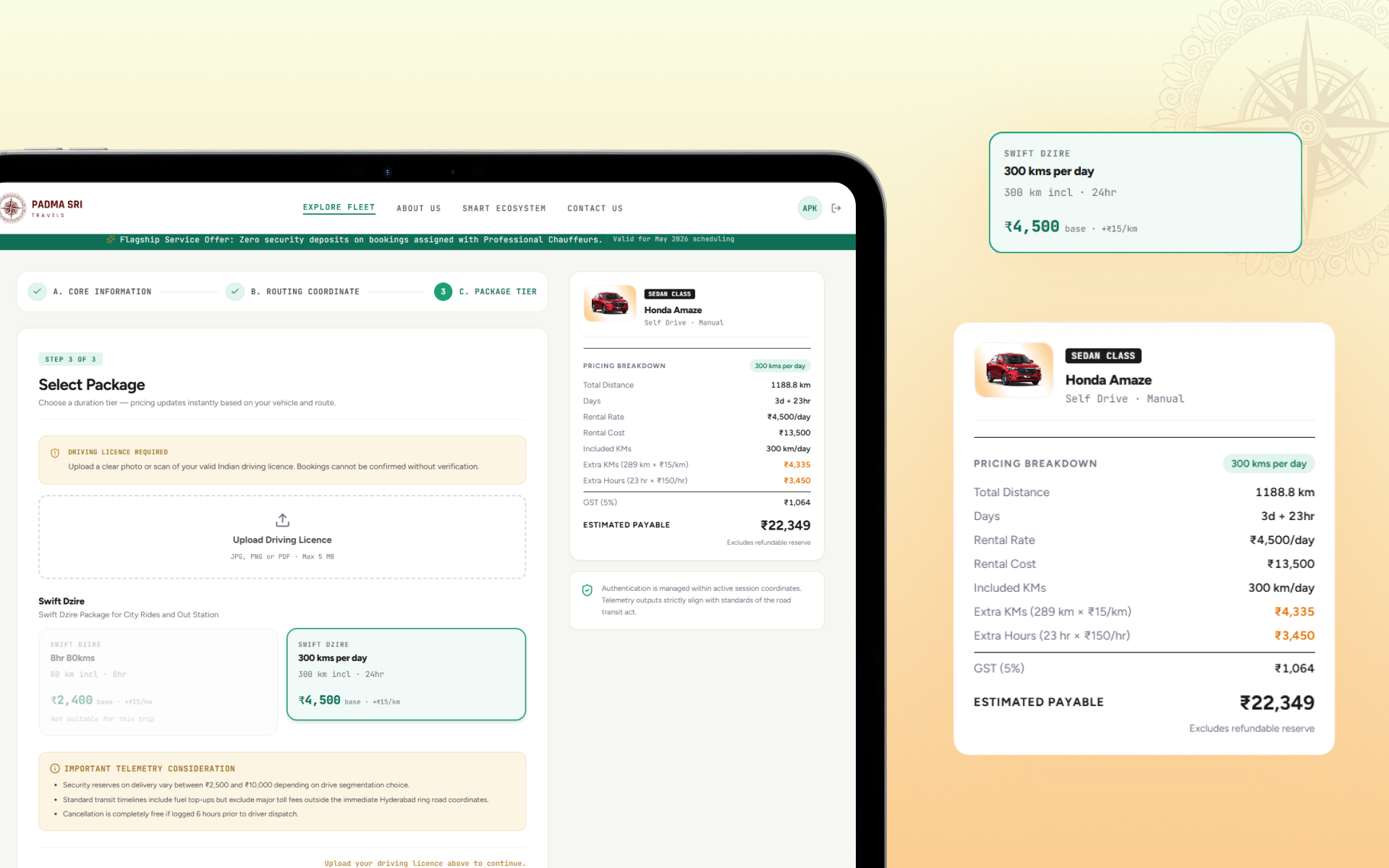
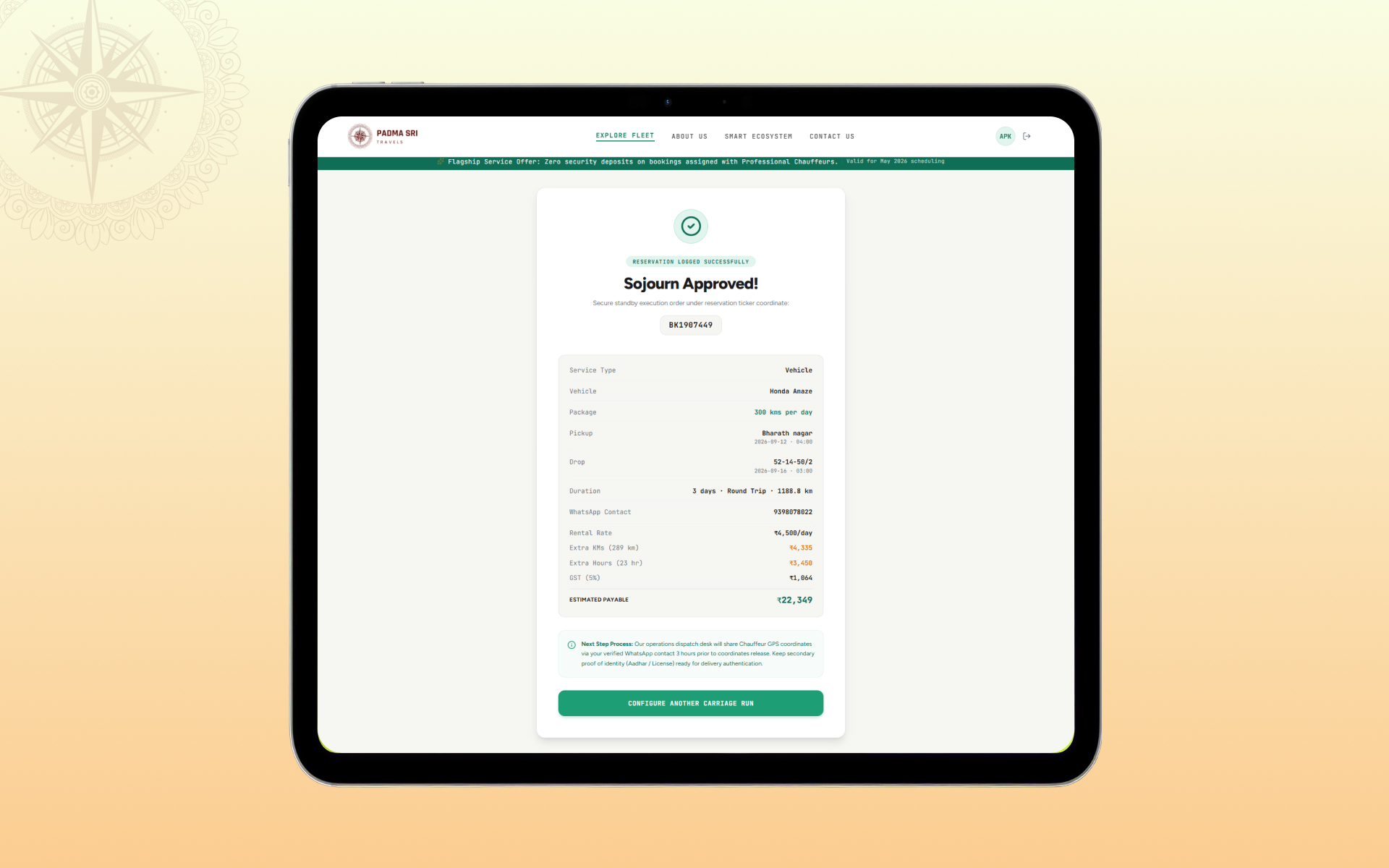
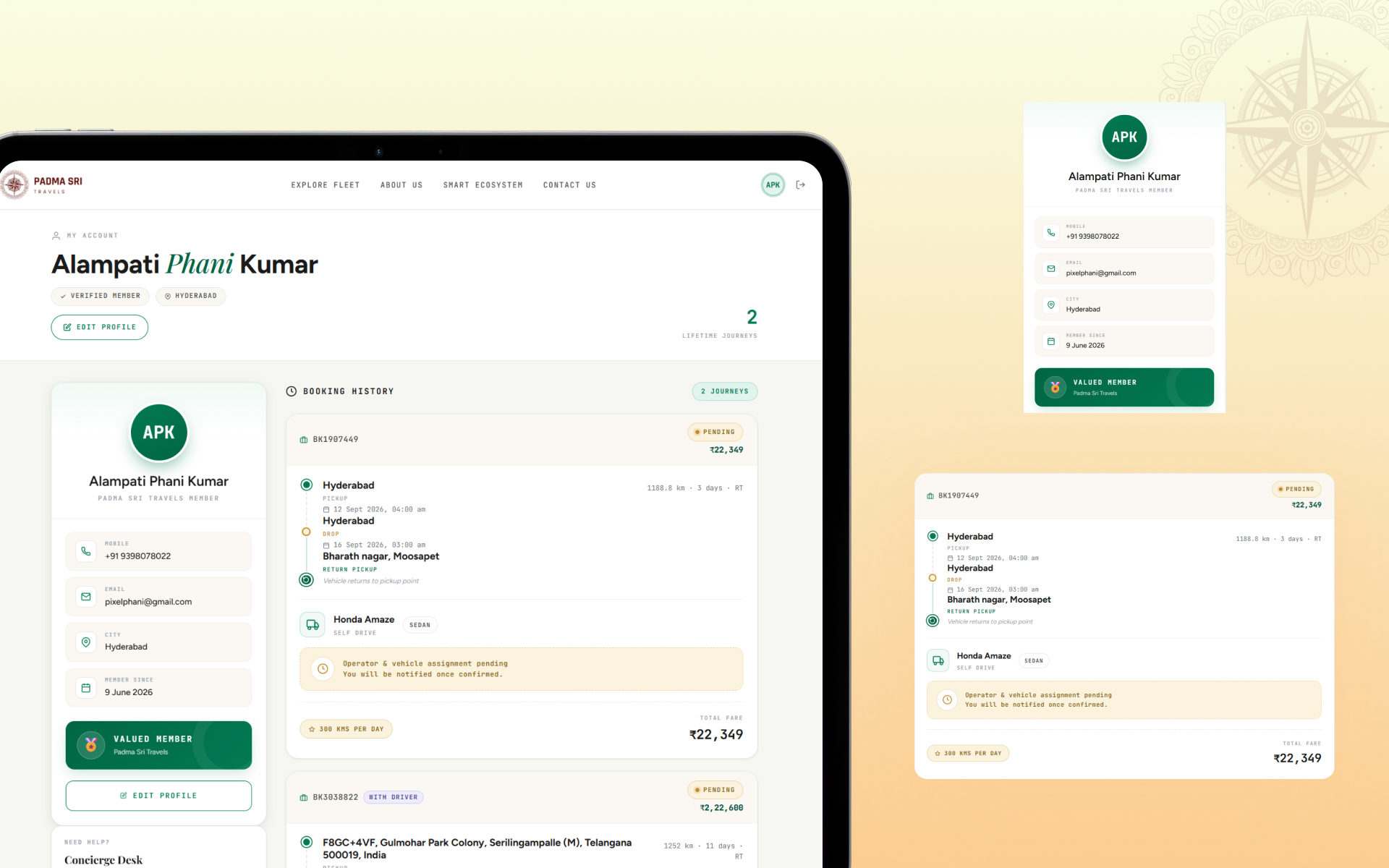
The challenge — Visitors couldn't easily get from browsing to booking without a phone call. Fleet options and pricing were completely opaque, leading to high drop-offs.
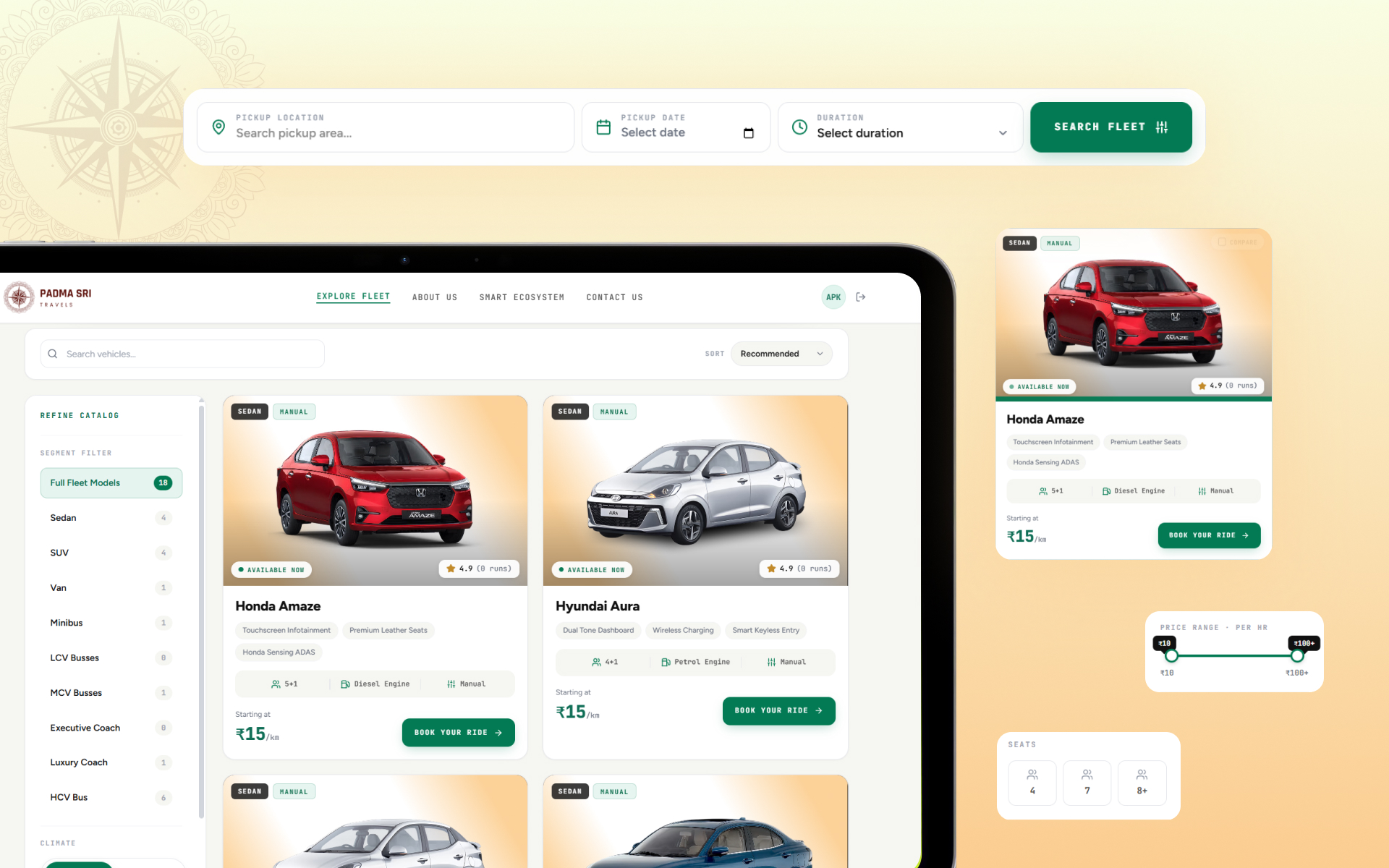
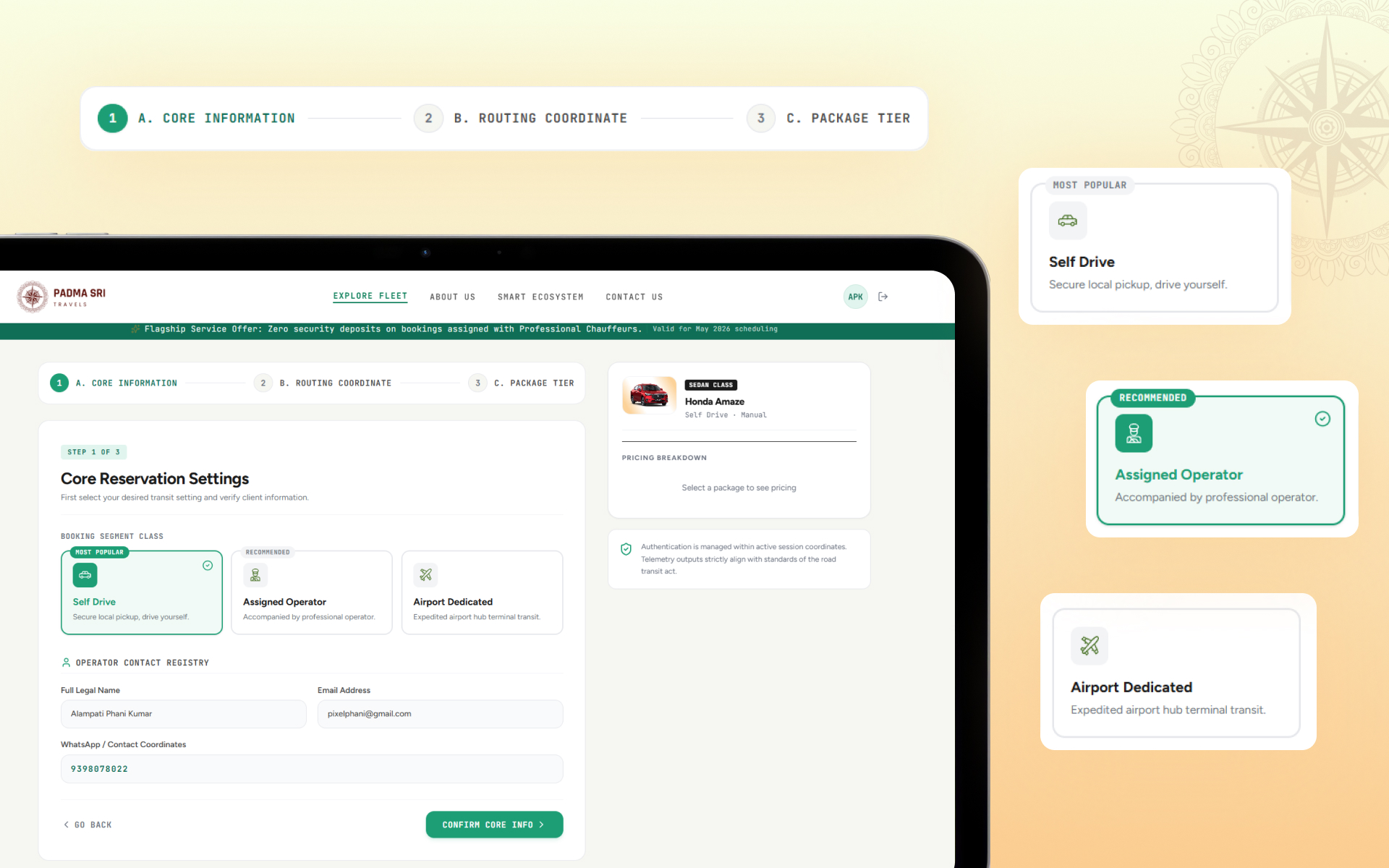
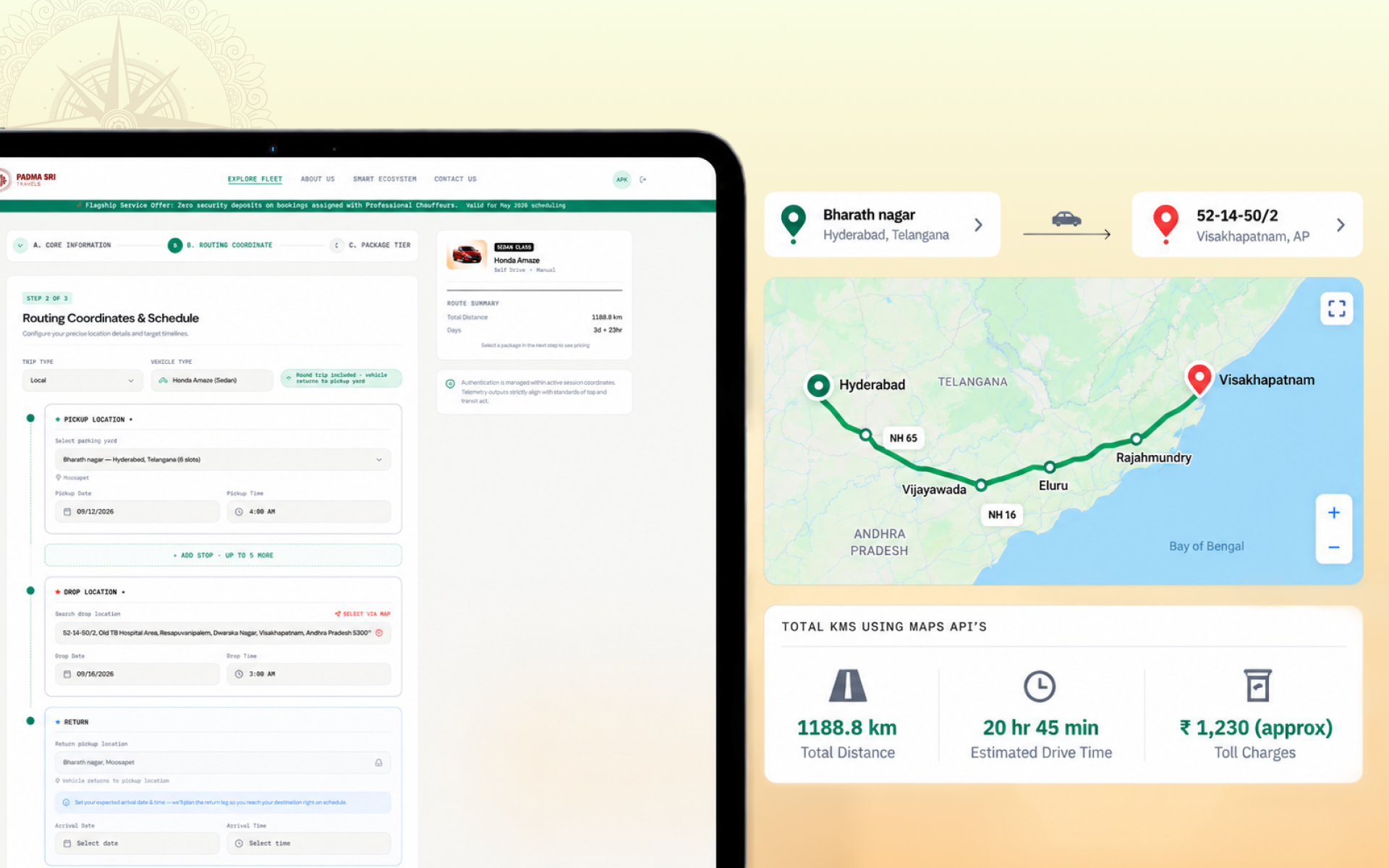
Key decision
I integrated the Google Routes API to calculate real road distance on the fly. Customers get an honest, real-time fare upfront — no hidden fees, and no "call for a quote" friction.
Collapsed searching, quoting, and payment into one friction-free flow
04 — Under the hood
The engineering behind the design
RLS security gap
I discovered and locked down an open Row-Level Security policy that exposed customer phone numbers, then re-audited all query boundaries.
One pricing engine
I built a single shared pricing.ts engine so every app calculates and quotes the exact same fare, every single time.
Custom driver auth
I implemented token-based authentication using bcrypt, Supabase Edge Functions, and a dedicated sessions table tailored for shared driver phones.
Routes API migration
I transitioned our distance math from Google's deprecated Directions API to the Routes API, wrapping calls in a secure server endpoint to protect API keys.
Redux Toolkit rebuild
I re-architected the admin console state using Redux Toolkit, keeping live vehicle tracking and dispatch queues buttery smooth as the fleet expanded.
I owned the full product lifecycle — product design, frontend interfaces, backend services, and data security.
05 — Results
What the clients say
"We moved 1,200 employees to Padma Sri for the daily commute and on-time compliance jumped to 98%."
"Their night-shift transport for our 600-member team has run flawlessly for three years."
Stat — to confirm
[ ]
Total online trips booked through the new platform
Stat — to confirm
[ ]
Dispatcher time saved per ride assignment
Verified
ISO 9001:2015
Client certification, publicly listed
Verified
Startup India
Recognised operator
06 — Reflection
Hardest trade-off
Building four surfaces on a tight schedule meant keeping the driver app strictly focused on essentials — trip manifests, live status, and trip history — and holding off on extras until dispatch was rock-solid.
With more time
I would have run deep database security audits earlier. Fixing that open RLS policy was straightforward, but catching it after three apps were already in progress was an important wake-up call.
Shipping next
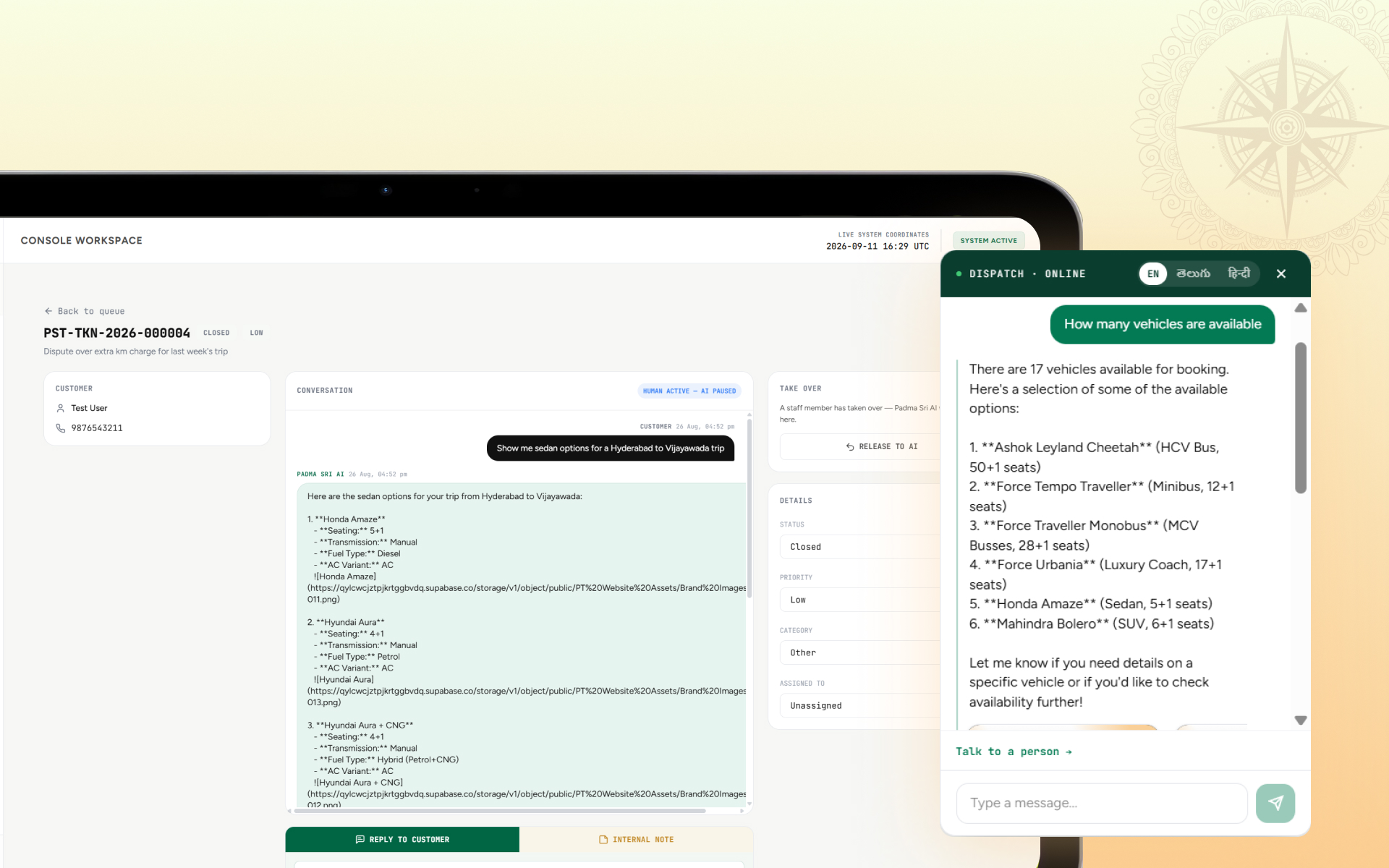
Next up: an automated AI customer support agent, expanding the fleet past 100 electric vehicles, and launching the passenger app on the Google Play Store.